Monday, 14 December 2009

About love

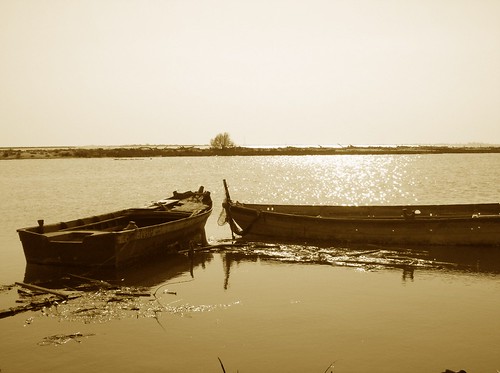
image taken from here
original text taken from here:


Eine Kleinigkeit
(für Catherine)

Ich weiß nicht was Liebe ist
aber vielleicht ist es etwas wie das:

Wenn sie
nach Hause kommt aus dem Ausland
und stolz zu mir sagt: »Ich habe
eine Wasserratte gesehen«
und ich erinnere mich an diese Worte
wenn ich aufwache in der Nacht
und am nächsten Tag bei der Arbeit
und ich sehne mich danach
sie dieselben Worte
noch einmal sagen zu hören
und auch danach
dass sie nochmals genau so aussehen soll
wie sie aussah
als sie sie sagte -

Ich denke, das ist vielleicht Liebe
oder doch etwas hinreichend Ähnliches


A littleness

I don't know what love is
but perhaps
it is something like this:

when she
comes back from abroad
and proudly says to me: "I've
seen a water rat"
and I remember these words
when I wake up at night
and the day after at work
and I miss that
these very words
once more I hear her saying
and again and again
exactly seeming
as they seemed
when she said them

I think that perhaps it is love,
or at least something very similar to it.


translation is mine, any advice is welcome.

Saturday, 5 December 2009

Dictionaries and co.

Foto from Flickr
If you study languages, or are interested in language learning one of your best friend is called dictionary. I often use online dictionaries, because it's quicker than turning pages. You just type in a word and wait.
Doing my german homework I've found a couple new sources that deserve mention in this blog. The first is the online version of SANSONI provided by the italian newspapaer "Corriere della Sera", which is a really good dictionary and of great help. But one of the greatest problem when you study German is the possibility of creating new words that could generate confusion in the reader, and here the second source could be of great help. Bab.la is something more than a dictionary, because provides you the meaning of the words, but also an example of use. But the thing that deserves mention is this: whenever you cannot find there the word you need you can look for it in another source (so far, quite obvious)and then put it there. It will be checked, but in the meantime it is available with the red writing "non verif." (not checked).
That's great for a basic reason, language is something alive, then changes and enlarges itself, so obviously a living dictionary is a great advantage.
Of course there is the negative aspect that we always find talking about online sources: reliability. But as always the solution is to take it as a starting point and not as a universal truth. To have an initial meaning (the most unprecise it could be) it is better than wondering without knowing.

Wednesday, 25 November 2009

A new Banner


There is a new banner in my blog, it comes from a page that has something to do with language learning.
When you start learning a language one of the most important thing is vocabulary. To learn new words is the first step to express yourself in the target language, and I found a way to improve your vocabulary and help to fight hunger.
Freerice
is an opportunity for language learner, for those of you who want to learn English French German Italian or Spanish.
When you open the page, you'll find a quiz, there are words you are asked to translate in English, and for every word guessed 10 grains rice will be donate through the World Food Program.

I found it some time ago thanks to Karenuccia, but after my last template change it went lost, now I redescovered it for my German training, I'm always trying to find new ways to improve my vocabulary, and I think that is a great way!

For any other information have a look to the page!

Thursday, 12 November 2009

Senza Fiato


Dolores O'riordan is one of the best voice ever. I love her interpretation, the energy she can show in her singing. Giuliano is the leader of an Italian Group: Negramaro.
This song really leave you breathless.

Monday, 9 November 2009

Starting a new work

Foto from here
I met Henry James for the first time when I watched "portrait of a lady", and I must confess that I didn't appreciate the film, this led me to avoid the book, and in my literature studies he was never mentioned directly, I mean, studying Joyce I found referrment to James' work, but the interesting thing is that he has no chapter dedicated in the Norton Anthology (my literary bible).
Now I'm dealing with him because of my final dissertation and I'm starting to believe that he deserve something more...
I'm reading his novella "The turn of the screw", rather, I've already read it and I'm now analizing its content and the way it s organized, That's why I'm not referring to it as a ghost story, because first and foremost I'm aware it is not. We cannot define it in a specific genre, because the author himself wants us to be confused about it. The "ghost story is full of hints of a paranoia of the narrator, the young governess who went and lived in Bly. The reader is led to doubt on what she describes, and in tragic scene at the end of the story is no longer sure of what has happened.
The story has caught the attention of many artists and critics since when it was written and in 1954, when the Biennale commissioned him a new work, Benjamin Britten chose this very story, and "The Turn of the Screw" became an opera. The particular ambiguity of this story created several problems to the composer and the librettist, Myfanwy Piper, but the thing on which I'll focus my attention will be the interpretation of Britten who found himself to choose between Innocence and Experience, and this time chose Experience.

Stay tuned for next steps...

Tuesday, 6 October 2009

The House of Sleep


"The house of sleep" is one of my favourite book, a novel by Jonathan Coe and the topic of my final dissertation at the end of the first three years University.

The novel is diveded in six sections, the first is titled 'awake', then you can find the four phases of sleep and the last one R.E.M. phase, in the end there are three Appendixes (Poem, Letter, Transcript). Each section consists of three chapters, odd-numbered chapters are set in 1983-84, even-numbered chapters are set in June 1996.
The different sections of the novel are closely linked through words, they don't come to an end just dissolve, like an interrupted dream, in an incomplete sentence, the final word of each stage of sleeping is picked up at the beginning of the following one, but in another context and sometime even by another character.

The story deals with a group of students that share a house in th '80s and fall in and out of love, the we see them in the '90s with their lives changed. We can say that the very protagonist of the whole novel is Sarah, she suffer from narcolepsy, and in the 80's she's not aware of it. Narcolepsy is characterized by Eccessive Daytime Sleepiness (EDS), cataplexy, vivid hallucinations, brief episodes of total paralysis. Who suffer from Narcolepsy can fall asleep even in active conditions, like eating or talking, what is called sleep attack. Adult patients often perceive narcoleptic symptoms as embarassing and social isolation may result. They may experience interpersonal problems, and are perceived as lazy or are suspected of illegal drug use.
Sarah's symptoms will cause a large number of misundedrstanding throughout the story, sometime caomically and sometime less. At the beginning of the story Sarah has an affair with Gregory, a fastidious student of medicine, who seems to be more interested in her as a medical case than as a person, and her girlfriend. We will find him as a doctor in '96, a very precise doctor who run a clinic for sleep disordes who starts to hate sleep, because "the sleeper is helpless; powerless. Sleep puts even the strongest people at the mercy of the weakest and the most feeble". Then she knows Robert, who falls hopelessly in love with her, Robert seems to be one of the few to understand that she suffers from a real desease. At the beginning of the story he's studing modern languages, but then he change to psychiatry, probably to find a way to help her. He has is life totally changed by this woman. Terry is a student at Ashdown with Robert and Sarah, he sleeps almost 14 hours per day, then he will be one of Dr. Gregory patients because of his insomnia, he says that is his curse, always tired and never tired enough to sleep. As a student he was "plagued by dreams" and then he became a journalist obsessed by movies, a kind of dreaming without sleeping.

Sarah's symptoms cause a large number of misunderstandings throughout of the novel, but narcolepsy is also an excuse to talk about medicine and doctors. There is a comical conference with psychologists who try to sustain their own ideas even when everything demonstrate they are wrong. Doctors who consider research even more important than their patients' lives. Jonathan Coe is humorous but while you're laughing inevitably think about the context in wich the scenes takes place and some characters in the story are frightening when they have the chance to explain their own vision of life.

In the end is one of the best novel I have ever read, it is well-written, witty, never banal. Give it a chance!

Wednesday, 30 September 2009

In Padova


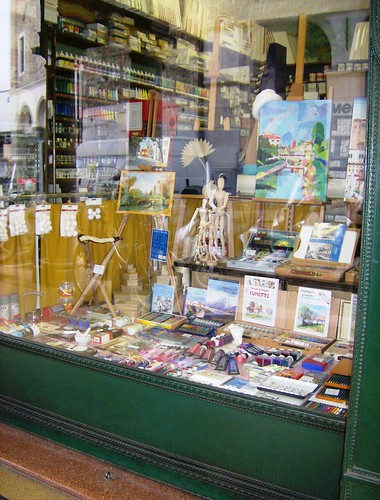
I can't draw. And I don't like it. Even when I was a child, I hated the moment our teacher used to ask us to draw a picture. Because I can't do it.

But every time I pass by this little shop I can't avoid stopping in front of it, and I would like to enter it once. Now, I don't dare because I know that there is nothing for me inside, but stopping in front of the window I wish I could draw and paint, just to enter. I know that in a place like this probably there is an old shop assistant, one of those who perfectly knows everything about art. One of those who knows everything about Giotto, for example and can explain you how to make a perfect picture. Because in these old little shops, assistants are always like this, I'm sure!

This shop is in the very centre of Padova and it is one of my favourite place, because when I stop there to look at the window my mind can wander and imagine things, because like many old things is something rare and beautiful.
And still, I can't draw, and I don't like it.

Thursday, 6 August 2009

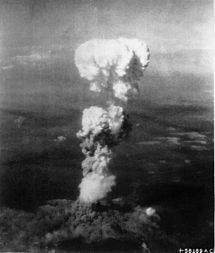
6th August 1945

Image from Wikipedia

There are mistakes we are not allowed to forget.

Saturday, 1 August 2009

...wait and see...


Sometime, all you need is a bit of calm, and just wait for the things to come...
but you feel that you should do something
looking around you see everything is stillness and silence
and breathing deeply you decide to wait and see.

Monday, 20 July 2009

Language education

I live in the north-east of Italy, in Veneto, the Italian region were the local dialect is used the most, as I learnt from my latest exam. My family is a mix of different cities inside this very same region, my father’s family is from Rovigo (the city where I live), but my mother’s family is partly from a village near Venice and partly from a village near Treviso (I’ve already talked about where they live). Anyway part of my family live in Verona, and others live between Mantova and Ferrara… And they are only those with whom I am in contact.

At home wespeak Italian, and that was the language that we, children, were supposed to learn, but of course when we get in contact with our granpas and granmas we hear other languages. In my father’s family a chair is a ‘carega’, but in my aunt’s house (near Ferrara) there were other objects, ‘scarana’ (chair-sedia), ‘granadel’ (broom-scopa), ‘bagaj’ (thing-coso/a). And different ways to say things, another language…

I learned Dialect when I was grown-up, I used to spent much time with my granparents and the only language used at home was dialect; my sister didn’t like it, she insisted to speak Italian, and sometime reproached me for my talk. At school, no doubt, Italian was the only language allowed, and also with unknown adults. My granma worked as a tailor, there were many people at any time of day at home, and I could appreciate moments in which (and clients to whom) she spoke a fine Italian, and others when dialect was possible.

Until high-school I’ve always used Italian at school, but then in my class I was the only one coming from the city (if we can talk about city…) and all my mates came from villages around Rovigo and Padua the language used among us was definitely dialect. I still remember a group of girls from another class saying “How rough, they speak dialect!”. That’s how it was considered.

Venetian dialect is the language of great writers and artists through different centuries, and part of this language became Italian in the long process called “questione della lingua” that started with Dante, went on with Manzoni, until the language that is now called Standard Italian. So, it is clear that it is not rough or anything, they were (and probably still are) a group of posh girls!

Now, I speak Italian the most, with some of my friends I speak dialect, at home I know that there are different dialects to use with different people, and there are still words that are unknown to me in some of my family languages. But dialect is a kind of code for me, I cannot recognize the code-switching moment, but when I use it I feel at home. I consider it much more expressive, because is the language in which I usually express feelings, bad feelings most of all. When I’m too nervous to control what I’m saying I don’t use a proper Italian….

If you ask me, I speak a very good Italian, I can speak a good English (or i hope so!), and I get angry in Dialect.