Thursday, 6 August 2009

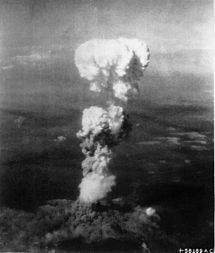
6th August 1945

Image from Wikipedia

There are mistakes we are not allowed to forget.
Saturday, 1 August 2009

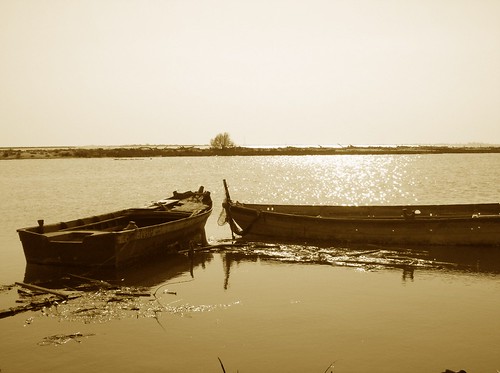
...wait and see...


Sometime, all you need is a bit of calm, and just wait for the things to come...
but you feel that you should do something
looking around you see everything is stillness and silence
and breathing deeply you decide to wait and see.

Monday, 20 July 2009

Language education

I live in the north-east of Italy, in Veneto, the Italian region were the local dialect is used the most, as I learnt from my latest exam. My family is a mix of different cities inside this very same region, my father’s family is from Rovigo (the city where I live), but my mother’s family is partly from a village near Venice and partly from a village near Treviso (I’ve already talked about where they live). Anyway part of my family live in Verona, and others live between Mantova and Ferrara… And they are only those with whom I am in contact.

At home wespeak Italian, and that was the language that we, children, were supposed to learn, but of course when we get in contact with our granpas and granmas we hear other languages. In my father’s family a chair is a ‘carega’, but in my aunt’s house (near Ferrara) there were other objects, ‘scarana’ (chair-sedia), ‘granadel’ (broom-scopa), ‘bagaj’ (thing-coso/a). And different ways to say things, another language…

I learned Dialect when I was grown-up, I used to spent much time with my granparents and the only language used at home was dialect; my sister didn’t like it, she insisted to speak Italian, and sometime reproached me for my talk. At school, no doubt, Italian was the only language allowed, and also with unknown adults. My granma worked as a tailor, there were many people at any time of day at home, and I could appreciate moments in which (and clients to whom) she spoke a fine Italian, and others when dialect was possible.

Until high-school I’ve always used Italian at school, but then in my class I was the only one coming from the city (if we can talk about city…) and all my mates came from villages around Rovigo and Padua the language used among us was definitely dialect. I still remember a group of girls from another class saying “How rough, they speak dialect!”. That’s how it was considered.

Venetian dialect is the language of great writers and artists through different centuries, and part of this language became Italian in the long process called “questione della lingua” that started with Dante, went on with Manzoni, until the language that is now called Standard Italian. So, it is clear that it is not rough or anything, they were (and probably still are) a group of posh girls!

Now, I speak Italian the most, with some of my friends I speak dialect, at home I know that there are different dialects to use with different people, and there are still words that are unknown to me in some of my family languages. But dialect is a kind of code for me, I cannot recognize the code-switching moment, but when I use it I feel at home. I consider it much more expressive, because is the language in which I usually express feelings, bad feelings most of all. When I’m too nervous to control what I’m saying I don’t use a proper Italian….

If you ask me, I speak a very good Italian, I can speak a good English (or i hope so!), and I get angry in Dialect.

Thursday, 7 May 2009

"occupation for an idle hour..."

I need to do something with my hands today, I don't know if you ever have this feeling, of using your hands to do something, and the result is this.


The first try was definitely less succesful, but the second time I watch on them to be sure of the final result! Then with a bit of creme ganache it was done!

Ready to be eaten tonight!


Tuesday, 5 May 2009

On facebook

Photo from Flickr
As I wrote more than once, I've learned that modern technology can be really useful to learn a language (particularly English, of course), and I've discovered many different tools that I'm currently using (this blog of mine, for example), during last year course at Uni.

I can easily remember during a reflective lesson about Personal Leanguage Environment, a collegue of mine talking about social network, in particular she was referring to myspace, but then facebook was named too. I ignored what these things were, and I could not have an idea of how to use them. Then we spent some time to talk about it, and I could make some theory on these things, but they didn't sound so good to me.

Now, I'm one of the I-Don't-know-how-many people who have an account on it, and I'm much more familiar to social network, I know what it is and how it works, still, I cannot understand how I could use it to improve my language. As it is described in Facebook homepage, it helps you to connect and share with people of your life, and that's definitely true! Moreover there are people in my life, that I could not be in touch withouth something like facebook. A friend of mine lives in Chile, and even though I have his mail address, facebook is a much better tool to be in contact with him. But considering the short message I leave on other people's wall, and I usually write more to those people who are part of my life everyday, I really cannot catch the use of it as a language learning tool.

Anyway, it is a great fun, and I must confess that I spend even too much time with it!

Wednesday, 22 April 2009

My favourite sport


...though I cannot practice it as much as I wish!
The first time I have ridden I was 3, I can barely remember it. My uncle has a horse, and since I was a child he tried to teach me how to ride.

There is something special in riding a horse, it is not only a matter of open air and wind in your hair, there is a relation between you and the animal, and first of all you need to understand how this relation works. And in the same way the horse need to understand you. So in the very first phase you need to understand how you can communicate and how he answers. You define a contact, explaining that you (are supposed to) control the situation, and then a great part of your energy is dedicated to understand his reactions.

The gratest thing is when you realize that you're no longer thinking about it and everything is going on. This thing of being in relation with nature in such a way makes it magic. I'm not sure I can render this idea... There is not only a way to move or to do things, it is something more complicated, and thus much more enjoyable.

I'm really lucky, because anytime I go and visit my uncle I cn ask him to let me ride, and I started when I was so young that even though I fall down, and I experienced some "dangerous moments" I've never given up.

Friday, 17 April 2009

Little daisy bracelet for me!
Lucky me, I have children that bring me flowers sometimes, at least them!

Tuesday, 31 March 2009

Teaching English...

Foto from Flickr

…is a serious matter! I’m not only a language learner, of course, I’m also a language teacher. I said ‘of course’ because when you start to study at University, people start to have a different consideration of your knowledge. You become somehow an “authority” and when they need help in your field, they come and ask.

But studying English at Uni you understand that rules work a bit differently from what your teachers used to tell you at liceo. And here starts your dissidio interiore. You want your students to be part of this truth that has been revealed to you. You want to tell them the whole story. For instance, you don’t want to tell them that ‘some’ is used in affirmative sentence, while any in negative and interrogative, but you can’t provide them an alternative rule… You don’t want to show them schemes for MODALITY where it is said that can translate the Italian ‘potere’ and HAVE TO is used when it is not possible to conjugate must and so on.

But if you try to do something like this your students will start to look suspiciously at you. No more rules in English? And what about all the things that have been said so far?! What about books written that way?! Those books that provide you few simple rules to use and understand English?! And you, as a teacher, give up and provide them those schemes and rules that make them feel safe (because that’s what their asking you).

Sometimes, you give them a different example, nevertheless, an exception that could convey to what you know is the4 whole story! Who knows, it could even create some… doubts…

Saturday, 14 March 2009

How do you usually judge a book?

I must confess I do judge books by the cover, if it somehow strikes me, I'll give it a chance. When I say cover I mean the title, or the colours of the cover, or...

The author. I usually give a second chance to someone who told me a beautiful story. (but no more than a second chance, when it disappointed me...).

Then I start to handle the book, and if it smells of love story, I'll give up. I read love stories, but not when that's the main point. Love ( and death and other few topics) occurs in everybody's lives, so you don't need to consider it the main point when you're telling a story. Have you ever read a story without finding love in it?!

So far the book is in my hands...I read something about the author (if I don't know him/her) and then I read the back, usually there is a summary of the story, or something like that (the italian "quarta di copertina"). And that's the final phase, the most critical, now there must be something that strikes me, that intrigues me...
And, of course there is a very final thing that I consider, but it is just a little thing: the price. Of course I don't give up because of money (sometimes I can look for another edition), but when I didn't work, and consequently I had no money of my own, I used to go to bookshop, decide what I wanted and then I went to the city library to take it. This system never failed, and if the book was good I used to buy it.

I've been disappointed very few times by this method that I could say it is almost scientific!
And you?! How do you usually judge a book?!


P.S.
The photo has very little to do with the post, but last time I went to London, instead of the city I visited Notting Hill and Portobello road... and of course I could not but snap a pic of the very famous travel book shop!!!

Tuesday, 24 February 2009

Ocean Sea


Sabbia a perdita d'occhio, tra le ultime colline e il mare -il mare- nell'aria fredda di un pomeriggio quasi passato, e benedetto dal vento che sempre soffia da nord.
La spiaggia. E il mare.
[...]

The very beginning of Oceano mare, by Alessandro Baricco
(Sand as far as the eye can see, between the last hills, and the sea -the sea- in the cold air of an afternoon almost past, and blessed by the wind that always bow from the north. The beach. And the sea. translated byAlastair McEwen)


I would never dare to translate Alessandro Baricco. Never.
Because I love him, I adore him as an intellectual and as a novelist.
Ocean Sea is one of my favourite books, maybe my favourite book. I've read it many years ago, and I re-read it sometimes, when I need to read something beautiful.
Ocean Sea is a story, but it is also made of many different stories, one for each character, at least. Baricco's characters are always peculiar: children almost like angels, scientists involved in absurd researches, sailors that can tell marvellous stories without speaking, painters who use water instead of colours...

The story is set around a place called Locanda Almayer, the characters arrive here for different reason, but here they all find the sea, and that will complicate or finally solve their lives.
[...]
Questo è un posto che quasi non esiste. E se chiedi della locanda Almayer, la gente ti guarda sorpresa, e non sa.
[...]

Oceano mare, by Alessandro Baricco

When you read Baricco's stories, either this one, or any other, you must remember that nothing is there by chance, not even punctuation. The use of lay-out and punctuation is one of his main characteristic, in his novels you can find very long sentence (more than a page) and very short ones. The organization on the page tries to represent the scene he is describing, to emphasize words, and so it is a kind of description without the usual devices.
[...]
Spiaggia. E il mare.
Luce.
Il vento dal nord.
Il silenzio delle maree.
Giorni. Notti.
[...]
La prima cosa è il mio nome,
la prima cosa è il
mio nome, la seconda quegli occhi,
la prima cosa è il
mio nome, la seconda quegli occhi, la terza è un pensiero,la quarta la notte che viene,
[...]
Oceano mare, by Alessandro Baricco

The narrator plays an important role in Baricco's novel, it is a voice that follows all the stories and knows many things about the characters, s/he sometimes stops the narrations to tell external stories or to explain why they are behaving in a particular way. Humor is another great characteristic of Baricco's style, he underlines situations in order to make the reader smile.

Pensa rimugina e riflette e ragiona. Poi di scatto salta giù dal davanzale. Dalla parte della camera, s'intende. Bisognerebbe avere le ali per saltare giù dall'altra.
[...]
Rimane lì il bambino con gli occhi fissi sul mare. Ci resta per un po'. Poi guarda bene che intorno non ci sia nessuno e di scatto salta giù dal davanzale. Dalla parte della spaiggia, s'intende.
Oceano mare, by Alessandro Baricco

It is almost impossible to summarize the whole content of this novel, because there are many different stories composing one story, and if you listen to it "...you'll hear the voice of the Sea".

Here you can find a review, and probably a better description of what this novel deal with.